Monday, March 10, 2014

Movie Review - Extremely Loud and Incredibly Close

Extremely Loud and Incredibly Close is one of the strangest movies I have ever seen. I watched it on cable, and if it weren’t for the fact that I was too lazy to reach over the sofa cushion and hit the power button on the remote, I would not be writing this review. But I stuck it out to the end and am glad I did, because the ending certainly delivers.

Other than the film, World Trade Center, this movie is the only one I’ve seen that deals with 9/11—I still cannot bring myself to watch United 93. The stories are too sad and the memories of where I was and what I was doing when this tragedy struck are too raw. In particular, I’m still haunted by the image of a handsome young man standing outside the top of the second tower, with flames licking his heels and smoke swirling around him, with nowhere to go but down into death. That was someone’s husband perhaps, someone’s son. Some wife or mother was watching her husband or child dangle on the precipice of destruction. How can this be justified in the mind of that wife or mother? Where is the peace?

This movie deals with that question, opening with a scene where a man is falling from the sky—not in terror or fear—but transcending from a high place to one much lower. Immediately, I knew this 9/11 story would be very different from what I expected.

The setting is New York, and the main character is a little boy, Oskar, whose father (Tom Hanks) dies in one of the twin towers, having left several good-bye voice mail messages on the answering machine. Oskar is sent home early from school and arrives back to his apartment before his mother (Sandra Bullock). Horrified by what he hears in the first several messages, he cannot bring himself to listen to the final one. He hides the answering machine away and replaces it with another identical machine, hoping his mother won’t notice. Oskar can’t bear the fact that his loving father is gone. And yet, his dad’s presence remains with him somehow, leading him on a journey to find a place of peace.

The journey starts with a flashback of a park swing, where Hanks teaches his timid son the joys of swinging high—it starts by pumping the legs until momentum is gained, flying through the air, and then jumping safely to the ground. But Oskar is scared—he doesn’t like heights or being out of control—he doesn’t like the uncertainty of knowing what will happen when he jumps. By now, you may understand why I contemplated turning the movie off. But trust me when I say that all of this pays off in the ending.

As Oskar grieves his father’s death, he ventures through his dad’s things and discovers a collectible blue vase hidden on a closet shelf. When the vase breaks, a key is found in a little envelope bearing the word “Black.” Oskar interprets this as a sign that his father has left him a message and the key unlocks that message. Being a huge fan of scavenger hunts, Oskar goes on an elaborate search for the person with the last name of “Black” who might know the purpose for the key. He starts with the Manhattan phone book and begins making phone calls.

While the notion of a young boy traipsing through New York, knocking on doors of strange people with the last name “Black” may seem far-fetched, it does keep the story moving along. The screenwriters try to justify this bit of fabrication by having Oskar’s mom learn of his plan and visit all of the people ahead of time to tell them what her son is doing and why. That seems even more far-fetched in my opinion, but it is a sweet notion, and doesn’t detract from the power of the ending.

As Oskar’s search lingers, he begins to lose hope. He returns to the swing we have seen in the beginning of the movie and finds a clue wedged underneath the seat planted by his father—it is a folded newspaper clipping with a message circled, encouraging him to never stop searching. Oskar views this as a sign to keep going, but as time goes by and his search leads him nowhere, he becomes even more discouraged. Finally, through happenstance, he turns the clipping over and realizes that it is a phone number that has been circled—the number for the very first person he had called so long ago (Viola Davis). Through her, Oskar comes full circle and discovers the owner of the key. Unfortunately for him, it turns out that it has nothing to do with his dad, but does provides peace for Davis’ estranged husband who seeks closure regarding his own father’s death. The viewer gets the sense that Oskar’s quest will also bring peace and healing to their marriage.

 During the search, Oskar befriends an old, mute man (Max Von Sydow) who is staying with his grandmother. The man hasn’t spoken since a childhood trauma during World War II and communicates only through written notes and messages scrawled on his hands. He agrees to accompany Oskar on his quest to discover the owner of the key, and ironically, helps Oskar overcome some of his fears. Eventually, Oskar comes to discover that this man is his grandfather, a man who had abandoned his family years ago because of the pain of having lost his parents during the war.

The movie ends with the touching scene that ties the story together. Through Oskar’s wild and elaborate scavenger hunt, others (like his grandfather) have come to know a peace and acceptance of their loss. But what about Oskar? The viewer isn’t sure until we see a scrapbook he has made of all the people he met during his quest, entitled, "Extremely Loud and Incredibly Close." As he turns the last page of the scrapbook, we see a moveable animation of a man’s body falling from the ground back up into a tall, burning building. It is the body of his father who died so tragically on 9/11. And yet, to Oskar, his father isn’t lost, after all—his memory is still very much alive. Oskar has finally found the peace he’s been looking for for so long.

If just one person who lost a loved one on 9/11—or who has lost a loved one through any other tragedy—watches this movie and receives a bit of peace over how or why it happened, then the film has done its job. I have never lost a family member in that way, but I have witnessed the torment of others who suffer the unbearable loss of a spouse, parent, or child. There are no adequate answers for why these things happen and what could have been done differently to change the outcome. There never is an answer that satisfies, other than an acceptance of the situation with a sense of peace. For those who are born again in the Lord Jesus Christ, that peace comes in knowing that somehow God will make all things work together for our good. It takes an act of steadfast faith to stand firm in this conviction, no matter the horror of the circumstances.

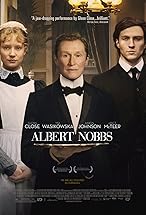
Movie Review - Albert Nobbs

Glenn Close, one of my favorite actresses, stars in this strange but gripping film about a nineteenth century Irish woman living life impersonating a man. Close was nominated for Best Actress, a well-deserved honor which has eluded her for years. This character was perfect Oscar material—odd and a bit unappealing, almost like a wax figure of a human living a stoic, robotic life. At first blush, I decided to forego seeing the movie, but the wonders of Netflix tempted my husband and me to give it a try. We were fully prepared to turn it off if the story dipped into the racy and salacious world of drag queens and transvestites, but it was nothing like that at all. While there are a few R rated moment, the movie is basically a tender, heart-breaking tale, with the common theme of a deeply wounded person desperately seeking love.

The setting is nineteenth century Dublin, where Albert Nobbs, a strange, androgynous-looking man, works as a waiter in Morrison's Hotel run by Marge Baker (Pauline Collins). Albert is diligent and hard-working and saves his money under a loose floorboard in his bedroom, hoping to purchase a business one day. Quiet and reclusive, Albert has few friends and is viewed by the other hotel staff as odd and eccentric. One day, a man named Hubert Page (Janet McTeer) is forced to share a bed with Albert for one night while painting a room in the hotel. Albert is horrified to have another human in his room, being especially careful to keep the location of his savings a secret. But it is the truth regarding his gender that is laid bare. Hubert inadvertently brings fleas into the bed which starts Albert on a scratching frenzy, causing him to strip off his shirt. Hubert assures Albert that his true identity will remain secure, but Albert remains worried that his cover will be blown. The next day, Hubert sets Albert’s mind at ease by revealing that he too is a woman, living life as a man.

Hubert tells Albert about her past life—that she was once married but finally retaliated against her violent and abusive husband. Instead of trying to survive in a man’s world, where a divorced/separated woman would be outcast, Hubert took on the identity of a man and lived happily and successfully as a house painter. Albert is pleased to know another woman who understands her situation, someone else who is hiding from past pain and just trying to survive under the social and economic constraints of their day. For the first time, Albert smiles and shows signs of hope for a better life.

As I watched this movie, I had to stop and evaluate my thoughts on what was being presented. While I do not condone women living as men and vice versa, especially in today’s North American society, I was reminded that it is best to ask why someone would choose such a lifestyle instead of automatically pointing the finger and judging wrong behavior. The world may say someone is born with a genetic predisposition to have certain desires, but in a fallen world where all men are born into sin, that is no excuse. Besides, the world has been given the cure for all sin and that is the person of Jesus Christ. But in the case of a person who doesn’t know the Savior and who has only been exposed to religion and harsh judgment, a closer examination is required. Why would this lifestyle be chosen? Could there be a past hurt, a sexual violation that created confusion or a paralyzing fear that makes that person shun normal intimacy? With today’s grim statistics on sex abuse, I’m always surprised that finger-pointing Christians don’t stop to ask these questions and explore whether there may be a connection. This film very subtly addresses that issue in a beautiful way.

As Albert gets to know Hubert and observes his happy life, she breaks down and shares her story. All we learn is that she was once a happy, young woman, but then on a fateful night when a group of young men abducted and violated her, her entire existence changed. At a time when hurt and shame was to be buried deep within the heart, never to be unearthed, Albert Nobbs came to be—a sad, stoic man, bound by a constricting corset and the fears of being found out. My heart broke, imagining the countless other young men and women whose innocence has been stripped away so unexpectantly, leaving deep, emotional wounds that never heal.

There is a wonderful scene where Hubert and Albert don dresses and bonnets and head to the beach for a stroll. Albert delights in the sun, wind, and salty spray, running through the sand as a woman again, experiencing a freedom that she hasn’t experienced in years. And then suddenly, she trips and falls, a reminder that hurt is in the world, just waiting to inflict more pain when least expected. The message is clear—for someone who has been deeply wounded, risking the joys of life as a normal, free person isn’t worth the cost of being hurt again. As Albert quickly concludes, it is much safer to hide behind the façade of a false identity and live a predictable, emotionless existence.

****SPOILER ALERT****

While the movie is touching and sad, it ends on a high note. Albert finally experiences love, and through his death, provides true freedom for another young woman and her baby that he never attained. As I write this review, I have a desire to see the film again to catch all of the lovely elements that promote this theme of hiding away from past hurts which preclude a life of love and freedom. For religious people who sour at anyone struggling in an alternative lifestyle, it would be best to stay away from this film, because it will offend in every way. But for those who desire to examine these issues and consider viewing the Albert Nobbs of the world as wounded victims in need of a Savior, this movie will provide more than entertainment. Hopefully, it will make you think, feel, and see others in a way you’ve never seen before, like it did me. Perhaps you will have the courage to show love and ask some questions of that wounded, hurting person in your sphere of influence who has chosen rebellion as his or her course. And perhaps you will be the one who hears their story being told for the very first time.

Saturday, March 8, 2014

Prom 2014!


A day for the inner princess and prince to emerge !! Very special evening! Love seeing them get all dressed up!!


Thursday, March 6, 2014

Magnolia Hill - Free Download on Amazon.com!

Magnolia Hill is available free on Amazon.com thru March 12, 2014. Download, read and let me know what you think!

http://www.amazon.com/Magnolia-Hill-ebook/dp/B00A1ID6JI/ref=la_B00A4461ZA_1_3?ie=UTF8&qid=1370646155&sr=1-3

In this sweeping, romantic tale, a beautiful farm girl in 1920’s North Carolina discovers the power of true love. 

Enter the world of Cadie Hamilton, where the beauty of the South with its rich green fields, floral landscapes, craggy oak trees, and grand antebellum houses, tempts her to believe her love for Boy, a wealthy plantation owner, is the answer to life’s problems. But when he disappears without a word, she is heartbroken and is forced to marry a common grocer’s son, Norman McLain, succumbing to a life of tragedy and despair. Her only hope is a newfound faith in the Lord that enables her to eventually love her husband in spite of his imperfections. But will that faith endure when Boy returns home to reclaim what was stolen from them years ago?

Tuesday, March 4, 2014

Walton Cheer Banquet 2014

Fun time! You can see that chevron is in! Always great to be around these girls with cool moms and fabulous coaches. Feeling very blessed!


Sunday, March 2, 2014

Eagle Scout COH Pictures

Great day of celebrating Braxton attaining the honor of Eagle Scout. We are very proud of our son and feel so blessed! It takes a lot of hard work, time, and dedication, but it was well worth it!!